
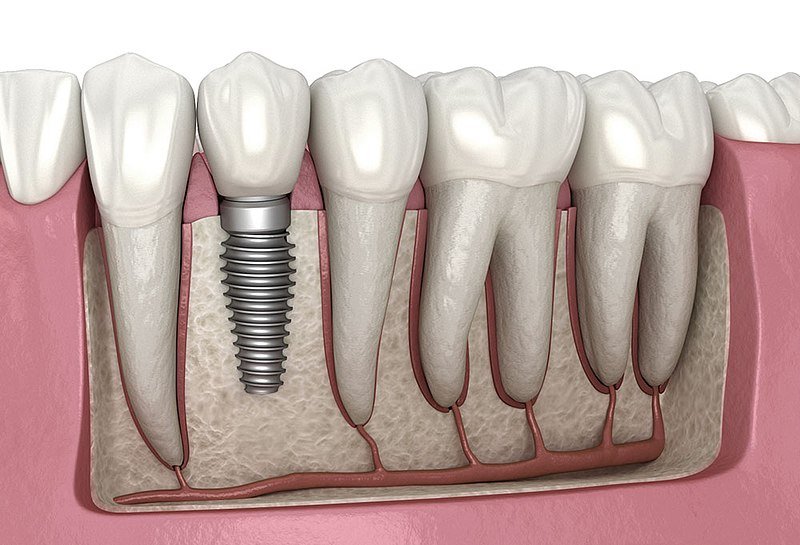
What is Dental Implants
Dental implants are a modern solution for replacing missing teeth. They consist of a titanium post that is surgically placed into the jawbone, acting as a replacement root. Once the implant integrates with the bone through a process called osseointegration, a crown or bridge is attached to restore the tooth’s function and appearance. Dental implants provide a stable, long-lasting alternative to traditional dentures and bridges, offering natural-looking results and preserving jawbone health. They are ideal for individuals with healthy gums and sufficient bone structure, and require proper oral hygiene and regular dental visits to ensure their success.
Symptoms Of Implants
Symptoms or issues with dental implants can include:
- Pain or Discomfort : Mild discomfort is normal during the healing period, but persistent or severe pain may indicate complications. Swelling and Bruising: Some swelling and bruising around the implant site can occur after surgery.
- Infection : Symptoms such as redness, swelling, and pus may signal an infection around the implant.
- Loose Implant : A loose implant could indicate that it is not integrating properly with the jawbone.
- Gum Recession :The gums around the implant may recede or become irritated.
- Sinus Issues : Implants placed in the upper jaw can sometimes affect the sinuses.
- Difficulty in Chewing : Initial difficulties in chewing might arise if the implant or crown is not properly fitted. Regular follow-ups with your dentist are essential to monitor the health and stability of the implant.
How to Treatment
Treating dental implants involves several key steps to ensure their success and longevity:
- Pre-Treatment Planning :
- Consultation : A thorough examination, including X-rays or 3D scans, to assess the jawbone and overall oral health.
- Treatment Planning : Determining the optimal implant type, size, and placement.
- Implant Placement :
- Surgical Procedure : The titanium implant post is surgically inserted into the jawbone. Local anesthesia is used to minimize discomfort.
- Healing Period : A healing period, typically 3-6 months, is required for the implant to integrate with the jawbone.
- Abutment Placement :
- Second Procedure : Once the implant is fully integrated, an abutment (connector) is placed on the implant. This serves as a base for the crown.
- Crown or Prosthetic Placement :
- Custom Crown : A custom-made crown or prosthetic is attached to the abutment, completing the restoration.
- Post-Treatment Care :
- Oral Hygiene : Regular brushing, flossing, and use of antimicrobial rinses to maintain oral health.
- Regular Check-Ups : Periodic visits to the dentist for monitoring the implant and surrounding tissues.
- Addressing Complications :
- Monitoring for Issues : Regular assessments to identify and address any issues such as infection, gum problems, or implant loosening.